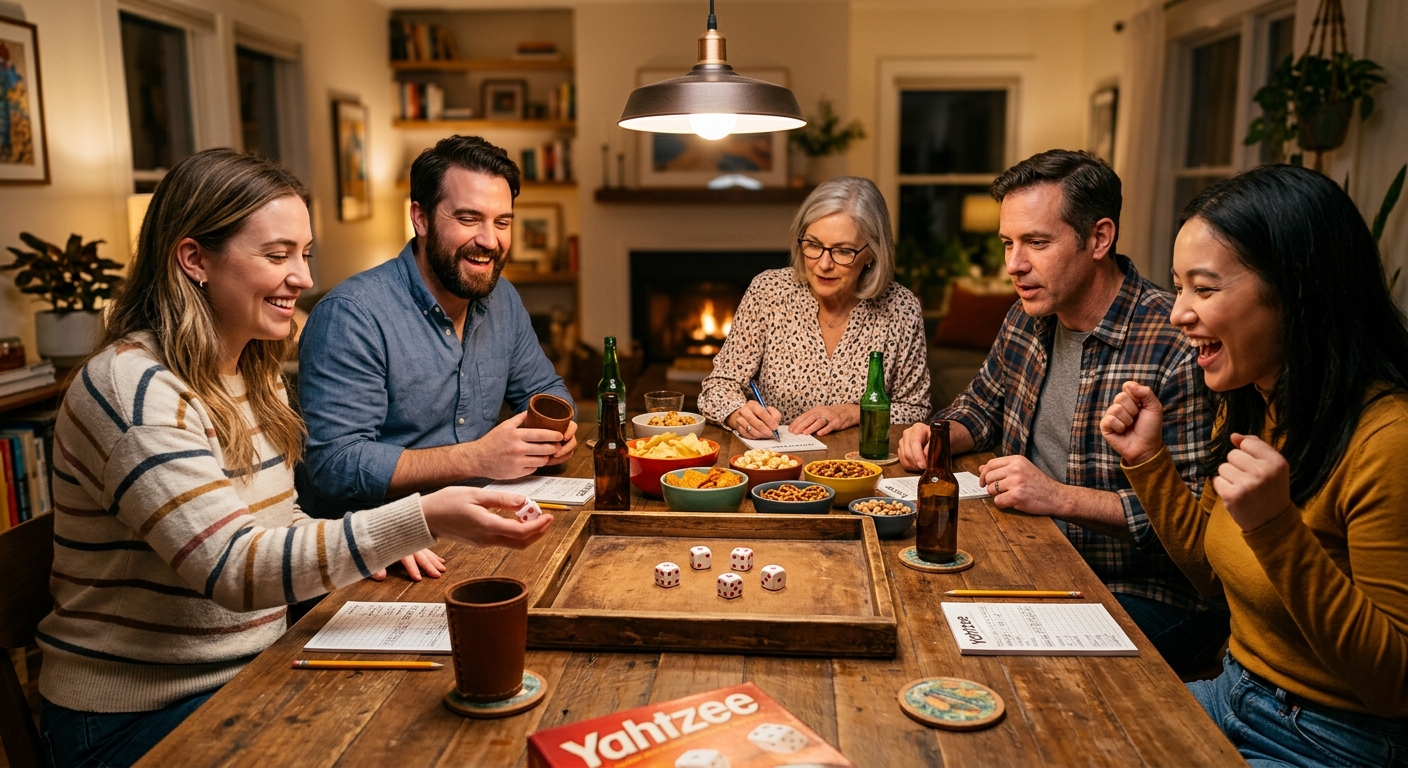
Gathering six people around a table for Yahtzee sounds simple until you realize three of them have never held a pair of dice competitively and two others have been tracking probability distributions since high school. Mixed-skill game nights are a beautiful thing. They are also a logistical puzzle that falls apart fast when nobody thought it through. Get the setup right, though, and you end up with something genuinely memorable. This guide covers everything from player count to house rules to what people actually do when it is not their turn.
Game Night at a Glance
- Set up multiple score sheets before anyone arrives so the game starts without delays.
- A few beginner-friendly house rules flatten the skill gap and keep new players genuinely engaged.
- Low-prep activities between turns prevent downtime from draining the energy at your table.
Getting the Player Count Right for Your Group
Yahtzee works with two to six players at a standard game table. More than six and you are walking into serious downtime problems. Each player takes a turn, then waits while everyone else takes theirs. With six players, that is five turns of sitting before you roll again. Beyond six, the energy tends to drop before the game even reaches the halfway point.
The sweet spot for a mixed-skill group is four to five players. That is enough variety to make the game interesting but short enough between turns that nobody fully zones out. If you have more people than that, consider running two separate games at once. Two tables of four will keep everyone far more engaged than one crowded session of eight.
Think carefully about who sits next to whom. Beginners tend to feel more comfortable next to someone patient rather than next to the player who audibly sighs when a Yahtzee attempt collapses on the third roll. Seating arrangement matters more than most hosts expect.
Preparing Score Sheets Before Guests Arrive
Print or prepare your score sheets before anyone gets there. This sounds obvious. It is also the thing that gets skipped most often. Scrambling for paper and pens after everyone has arrived adds a flat, disorganized ten minutes to the start of the evening, and that early friction sets entirely the wrong tone.
For a beginner-heavy group, use score sheets that have brief explanations printed right next to each category. Something like "Three of a Kind: add all dice" written on the sheet itself. Beginners spend a lot of mental energy just remembering what each category means. Reducing that cognitive load early lets them focus on the actual enjoyment of the game rather than constantly asking how scoring works.
Print a few extra copies. Sheets get filled in incorrectly, spilled on, or grabbed by the wrong person. Having spares on hand means the game continues without a stop.
House Rules That Help Beginners Without Boring Veterans
The standard rules of Yahtzee are not complicated, but a few small adjustments make a real difference for first-timers. The game has been a household staple since the 1950s, and a look at its origins reveals a design that was always meant to be accessible across experience levels. That said, a mixed-skill group benefits from a couple of intentional tweaks.
These adjustments are worth considering for your session:
- Explain-as-you-go: Any player can ask the group to explain a scoring option before committing. Nobody is penalized for asking. This takes pressure off beginners and often sparks useful strategy conversation for everyone at the table.
- No forced timer: Agree before the first roll that turns have no clock. Experienced players may want to nudge things along, but a forced pace tends to rattle new players into poor decisions they will feel bad about for the rest of the game.
- Open score sheet viewing: Allow players to look at each other's sheets freely throughout the game. This helps beginners understand how to prioritize their own categories and adds a light layer of strategic observation for more experienced players.
- One mulligan per game: Each player gets one no-questions-asked do-over roll in the entire game. This gives beginners a safety net and reduces the frustration of a truly punishing early turn.
You do not need to use all of these. Pick what fits your group. The goal is to narrow the experience gap without stripping out the genuine strategy that makes Yahtzee worth playing.
Pacing Your Rounds to Keep Energy High
One of the quietest killers of a game night is the dead wait. A player rolls, thinks for a long time, scores, and then everyone stares at the table while the next person picks up the dice. Repeat that across thirteen scoring rounds with five players and you have accumulated a significant amount of lifeless downtime.
Having someone act as a loose facilitator helps. Not a referee, just a person who gently nudges things forward when a turn drags too long. Keeping snacks and drinks within easy reach gives people something to do in the background without requiring their attention. Giving players a reason to watch other people's turns matters just as much. Commenting on dice rolls, cheering a near-Yahtzee, or groaning at a busted large straight creates shared investment in the game even when it is not your roll.
Another underrated trick: announce the category each player is going for before they commit. This keeps the table following along rather than drifting into their phones. It also helps beginners learn strategy by watching what experienced players prioritize.
What to Do at the Table Between Turns
This is the part that separates a forgettable game night from a genuinely great one. Downtime between turns does not have to be dead air.
The random question game is one of the best low-effort fillers for exactly this situation. It requires no setup, no materials, and no real attention span. Someone floats a question, the table responds in whatever direction feels natural, and the conversation either goes funny or surprisingly interesting. Then the dice come back around and everyone snaps back into Yahtzee. It works precisely because it demands nothing. Players who are mentally planning their next scoring move can half-participate while staying present at the table.
The appeal of filler activities like this is that they do not compete with the game for focus. They fill the air without pulling anyone away from what is happening. The key is keeping things genuinely low-stakes. Nobody should have to perform or prepare. A random question, a casual observation about someone's scoring decisions, a short story about a previous game night disaster, all of these work perfectly in the gaps.
Other between-turn activities worth keeping in your back pocket:
- Dice prediction: Before a player's third roll, everyone guesses what scoring category they will end up using. No prizes, just bragging rights. It keeps eyes on the game and adds a layer of light prediction fun.
- Play-by-play commentary: Encourage players to narrate their rolls like sports commentary. It sounds silly until someone does it and the whole table laughs. After that, it becomes a recurring bit for the rest of the night.
- Drop a dice fact: Keep a short list of Yahtzee trivia handy and drop one during a quiet moment. The odds of rolling a Yahtzee on the very first throw tend to genuinely surprise people, veterans included.
Handling Score Gaps Without Killing the Mood
In a mixed-skill group, score divergence can get awkward. An experienced player might pull far ahead by the middle of the game. This is normal and honestly fine, but it helps to set the right expectations before the first roll.
Say it plainly at the start: this is a friendly game, the scores will be all over the place, and that is completely fine. Name the expectation before it becomes an uncomfortable elephant in the room. Players who feel behind are more likely to stay engaged when they know nobody is silently judging the scoreboard.
A secondary personal goal helps too. Challenge everyone to beat their own previous score rather than chase the leader. If a beginner scored 150 in their first game, their goal in round two is 160. That gives them a meaningful target that has nothing to do with whether the veteran across the table just rolled their second Yahtzee of the night.
Planning the Evening So the Whole Group Wants to Come Back
Budget at least two hours for a group that includes beginners. A full game of Yahtzee across all thirteen scoring categories takes time, especially when players are still learning which boxes to prioritize and when. Plan a natural break between games if you run more than one round. People need to step away, refill their drinks, and reset before diving back in.
If you plan multiple games across the evening, rotate seating between rounds. It shifts the social dynamics and gives beginners a chance to sit near someone different. Two games often produce more memorable moments than one long session with the same fixed arrangement around the table.
Keep the end of the night light. Announce scores without turning them into a verdict on anyone's ability. Celebrate the highest single-roll moment of the night, the best comeback from a rough start, the funniest failed Yahtzee attempt. That kind of framing sticks in people's minds far longer than who finished first on the score sheet.
The best game nights end with someone asking when the next one is. That question is the real measure of success. Get the logistics right, give beginners a fair shot, keep the energy alive between rolls, and the answer to that question tends to take care of itself.